Detailed Agenda
Schedule subject to change. Check back often for updates.
Check out the detailed agenda below in order of date and time. View the Schedule-At-A-Glance to view all sessions, registration hours, social activities, and more in a printable format.
(PRE) Wilderness First Aid
The American Red Cross First Aid/CPR/AED program is designed to train rescuers to respond to medical emergencies in adults, children, and infants until more advanced medical personnel take over. Participants will be trained to recognize breathing and cardiac emergencies, and to respond to such emergencies by performing CPR, using an AED, and providing any other appropriate care until medical personnel arrive. Participants will learn the proper response to sudden illnesses such as heart attack, stroke, and seizures. This trainig also includes a foundation of first aid for other injuries such as burns and external bleeding. You will receive your First Aid Adult, Child, and Infant CPR and AED certifications.
(PRE) Universal High Efficiency Trail Assessment Process (HETAP)
The Universal Trail Assessment Process (UTAP) and the High Efficiency Trail Assessment Process (HETAP) collect objective information about trail conditions such as grade, cross slope, typical and minimum clearance width, surface type, firmness and obstructions. Through classroom and practical, hands-on trail assessment experience, participants will learn how to objectively measure trails using UTAP and HETAP. Participants will also learn the details of UTAP measurements, semi-automated wheeled information sensor package measurements, and HETAP 3.0 Software. This workshop will discuss the benefits of objective information, the application of UTAP and HETAP in diverse environments, how to disseminate Trail Access Information (TAI), and how that dissemination meets the requirements of the new federal accessibility guidelines for outdoor developed areas.
(PRE) Adult + Pediatric First Aid/CPR/AED
The American Red Cross First Aid/CPR/AED program is designed to train rescuers to respond to medical emergencies in adults, children, and infants until more advanced medical personnel take over. Participants will be trained to recognize breathing and cardiac emergencies, and to respond to such emergencies by performing CPR, using an AED, and providing any other appropriate care until medical personnel arrive. Participants will learn the proper response to sudden illnesses such as heart attack, stroke, and seizures. This training also includes a foundation of first aid for other injuries such as burns and external bleeding. You will receive your First Aid Adult, Child, and Infant CPR and AED certifications.
Registration Hours
Registration will be available to check-in, get your name badge and conference gift, and ask any questions throughout the conference.
(#51) A GIS model for trail stewardship and resiliency model
Through GIS modeling and analysis, ground truthing, and public facing data presentation the Green Mountain Club and Community Geographics have created a tool that provides valuable insights for long term trail stewardship and climate resilience of legacy trail systems. This session will review the iterative modeling process, field data validation, and results that confirm long held truths in sustainable trail design and provide insights to unseen factors that can influence trail sustainability.
(#25) AI Essentials for Everyone
Unleash AI to transform productivity and impact in parks and recreation. This session explores user-friendly tools to streamline tasks and optimize workflows, allowing more focus on meaningful community experiences. Learn to automate repetitive work, personalize marketing, and refine event planning for larger audiences. Whether you are an AI novice or expert, you will gain actionable strategies to boost efficiency and make data-driven decisions that elevate your daily operations and community engagement.
(#47) Restore the Ridge Partnership: Franconia Loop
2023 brought together Federal, state and conservation organizations to begin the restoration of the nearly 200 year old Franconia Loop trails. This presentation will cover the work of the World Trails Network -Americas to fund and build the NH State Parks portion of the loop trails. Sustainable trail construction of craftsman stone work and grade reversal drainage by professional trail builders and a volunteer program that will exceed over 500 volunteer days has become a model for collaborative sustainable trail restoration.
(#01) Utilizing Data to Advance Adaptive Recreation in Vermont
ROOM SPONSOR: MyRec.com
While states have long measured the economic value of outdoor recreation, little data has existed on the economic impact of adaptive and accessible recreation nationwide. This session will report on the full results of a yearlong study of the economic impact of Vermont Adaptive Ski & Sports. We will cover how Vermont Adaptive is using this data in concert with the Trail Accessibility Hub partnership to advocate for and advance adaptive recreation across the state.
(#71) Community Trees: Tree Care Tips to Enhance Parks and Green Spaces
The Vermont Urban and Community Forestry Program (UCF) works collaboratively between the Department of Forests, Parks and Recreation, University of Vermont Extension, the USDA Forest Service, and State and Private Foresters. UCF foresters support Arbor Day activities, train and advise Tree Wardens, monitor forest pests, support urban and park tree programs, and consult on tree care. In this workshop, Urban and Community Foresters, Joanne Garton and Adam McCullough will present on planting, tree care, pruning, and briefly, the impacts of Emerald Ash Borer (EAB). This program is applicable to any private, municipal, or parks staff seeking to grow their knowledge of tree care in a community setting.
(#67) Trail Project Life Cycle
Delivering successful trail projects requires a clear understanding of the full trail project life cycle - from early planning and feasibility through design, construction, and long-term maintenance. This session walks through the key phases of trail development, highlighting important decisions, project deliverables, stakeholder coordination, and implementation considerations along the way.
Participants will gain insight into how trail projects evolve across phases, how early decisions influence long-term sustainability and user experience, and how different project components work together to support successful outcomes. Ideal for land managers, planners, nonprofit leaders, and trail professionals, this session provides a practical overview of how trail projects move from idea to implementation.
(#16) Master Your Online Presence: Boost Community Engagement.
Building a strong digital presence is vital for community participation without draining resources. This session explores Google, Facebook, and Instagram tools to effectively engage your audience. Learn the difference between social media and advertising, plus best practices for parks and recreation departments. We will cover essential "must-do" strategies and pitfalls to avoid. Gain actionable knowledge on targeted ads and ROI to create a more efficient, impactful online presence for your community.
(#29) Building Vermont’s Outdoor Recreation Workforce Together
Vermont’s outdoor recreation system depends on collaboration across municipal parks and recreation departments, trail organizations, nonprofits, and state and federal partners. Yet many professionals lack a shared framework for skills, training, and career pathways. This session introduces the Outdoor Recreation Professional Competency Framework, developed through a national partnership led by SORP. Participants will explore how the framework supports local staff, volunteers, and organizations in building capacity, strengthening partnerships, and advancing workforce development. Through practical examples, attendees will learn how to apply competencies to hiring, staff training, and program delivery in Vermont’s unique recreation landscape.
(#40) Telling Your Story in Reverse: Analyzing Impact After the Fact
Every evaluation training will tell you to start by defining what you want to evaluate, then building your program to measure those things, and then analyzing data. In the recreation world, that’s not always possible. Sometimes you take over a program mid-stream and you need to reverse engineer your evaluation so you can tell your story. Using a state trail grant program as a case study, this session will walk you through tips and tricks for how to look back at the information you have to assess your impact.
(#54) Modernizing the Vermont Trails System
Over the past year and a half, FPR and the Vermont Trails and Greenways Council with support from CRO Planning and Design has been working to modernize the Vermont Trails System (VTS). The project had three components - consolidating a set of universal best practices for trail management in Vermont, creating a plan for updating the application and membership of the VTS, and recommending next steps to FPR. This session will update the trails community on the project and the future of the VTS.
(#44) Unpacking the VT Climate Asessment Recreation & Tourism Chapter
I will be delivering an update on the findings from the 2025 VT Climate Assessment Recreation & Tourism Chapter. The workshop will explain the goals of the Climate Assessment broadly and then dig into the findings in the Recreation & Tourism chapter to talk about the collaborative efforts it will take to continue providing sustainable recreation access into the future.
(#19) Park Report Cards: Turning Observations into Actionable Insights
Park report cards offer a simple, effective methodology for performing site visits and analyzing existing conditions. This methodology begins with an in-person park assessment using a series of evaluation criteria, including access to transportation, feelings of safety, lighting, and facility condition. Assessment results are then averaged and translated into a graphically pleasing report card that provides a clear and digestible understanding of how parks are currently serving the community and areas for future improvement.
(#55) Innovation in the Pedestrian Bridge World
The session introduces a history of innovation in the pedestrian bridge world, spanning from pre-history to the current state of the art with a particular focus on trail bridges.
(#58) A Community Driven Approach to Agrotourism and Mountain Biking
Through intentional partnerships with landowners, community members, and historic figures in the Stowe, Vermont region, an example of community-buy in, story telling, and the intentional bolstering of agricultural heritage provides real work examples of how to keep place-based connections authentic, while leaning into the future of the state of Recreation. We’ll examine how farms and trails-based organizations are working together to offer authentic, place-based experiences that extend visitor stays, diversify local economies, and deepen community connections. From trailside agricultural collaborations to joint marketing and community-based third spaces, these partnerships demonstrate how outdoor recreation can amplify and compliment the value of Vermont’s agricultural heritage rather than replace it.
(#52) Disaster Recovery on Trails - working with FEMA and beyond
The Long Trail System saw severe impacts from three different 1% chance flooding events between 2023 and 2024. This session will cover successes and lessons learned in the immediate and long-term recovery of trails including: weighing priorities, response protocols, data gathering, securing disaster recovery funding, and the on-going process of repair and recovery.
Lunch + Keynote Ethan Tapper
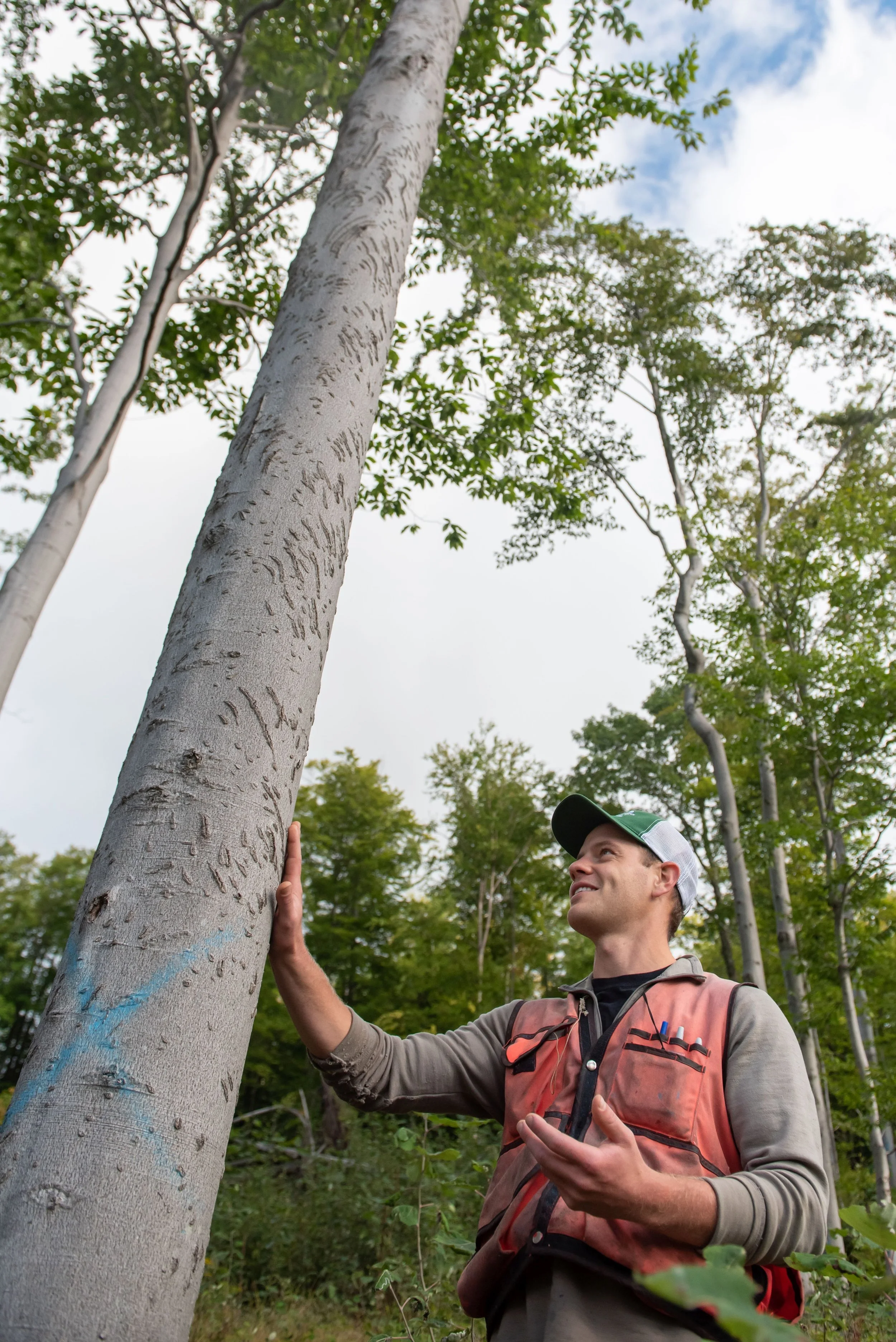
Join us for a buffet lunch and our keynote of the 2026 conference Ethan Tapper. Ethan is a forester, ecologist, digital storyteller, and the bestselling author of How to Love a Forest: The Bittersweet Work of Tending a Changing World.
(#22) Inclusive Play Matters: Evidence-Based Design Best Practices for Play and Recreation Destinations
Thoughtfully break down physical and social barriers to create a welcoming atmosphere and ensure parks intentionally support the developmental benefits of inclusive, intergenerational play! Research findings and new data offer unique insights to demonstrate the positive impact of designing outdoor destinations to address the diverse needs of the whole child, the whole environment, and the whole community!
(#31) Recreation Funding Opportunities: From Downtown to Mountaintop
Learn about upcoming recreation funding opportunities from the state! This session will share information about multiple grant programs that fund everything from trails to playgrounds to pools to trails and more! We'll cover timeline, eligible activities, and funding amounts for each program presented so you can identify which grant program is right for your project, plus share some grant-writing resources.
(#68) Fundamentals of Aggregate Surface Trails
This session provides a broad-based overview of best practices for designing and constructing high-performing aggregate surface trails. Participants will explore how material selection, gradation, and proper layering contribute to long-term durability, accessibility, and environmental sustainability.
The discussion will cover key design considerations, including slope, drainage, soil stability, and the use of geotextiles to enhance performance. Attendees will gain practical insights into how thoughtful planning and construction techniques result in resilient, low-maintenance trails that harmonize with the natural landscape.
(#37) Building Connected Communities: From Programs to Gold
Recreation can do more than offer activities—it can create lasting connection. This session explores how partnering with Vermont Senior Games helps communities move beyond standalone programs to build networks of belonging, motivation, and celebration for older adults. Learn how statewide events strengthen local engagement, reduce social isolation, and unite partners around shared goals—turning participation into pride, purpose, and even gold‑medal moments.
(#46) Cooperative Project Planning on the Appalachian Trail
The Appalachian Trail in New England spans over 700 miles from Connecticut to Maine and is cooperatively managed by federal agencies, maintaining clubs, and the Appalachian Trail Conservancy (ATC). During this session, ATC will describe a region-wide effort to plan and implement a tread assessment process and geospatial analysis designed to support project planning across various land managers and funding sources–an effort that has taken careful coordination and partnership every step of the way.
(#64) Appalachian Mountain Club's Maine Woods Initiative
How do you steward large landscapes while strengthening the communities who live, work, and recreate there? Drawing from the 130,000-acre Maine Woods Initiative, this workshop explores the Appalachian Mountain Club's people-centered model of land conservation that blends land management, recreation, economic vitality, and community partnerships. Participants will examine how intentional community engagement, Indigenous collaboration, public access, and shared governance can amplify conservation outcomes across decades.
(#18) "You're Ruining This Park:" The Revisioning of North Hero State Park
Witness the challenging rebirth of a defunct park into a sustainably managed recreational asset. Journey with our presenters through the circuitous process of taking North Hero State Park from a struggling campground to an accessible day-use park with a greener footprint. Learn how three successive regional managers approached shutting down traditional operations, revisioning the park, collaborating with subject matter experts and partners, integrating passionate public feedback, and ultimately carrying out this less-is-more revitalization effort.
(#69) Trail Fundamentals: Core Concepts for Sustainable Trails
(#69) Trail Fundamentals: Core Concepts for Sustainable Trails
(#74) Communicating Conservation
How do we communicate effectively? In the world of conservation, outdoor recreation, forestry, and wildlife management, ineffective communication has often been a barrier to public understanding and acceptance.
Over the last 15 years, Ethan Tapper has led hundreds of events, attended by thousands of people, written books read by tens of thousands more, and built social media followings of hundreds of thousands, with videos watched millions of times each month. Ethan has been recognized as a writer – winning the 2025 New England Book Award for non-fiction – as well as a conservation communicator, winning numerous regional and national awards for his communication work. He will discuss the nuances of effective communication, including both messaging and story-telling and how we utilize different communication formats, from in-person events to social media, to reach people.
Learning Objectives:
Understand why effective communication is important;
Understand why language and messaging is important;
Understand how to use different formats to improve reach and delivery of messaging.
Presenters:
Ethan Tapper, Forester/Author, Bear Island LLC
Ethan Tapper is a forester, ecologist, content creator, and the bestselling author of How to Love a Forest: The Bittersweet Work of Tending a Changing World. For more than a decade, Ethan has been recognized as a thought-leader in the world of ecosystem stewardship, winning numerous regional and national awards for his work. More recently, he has been recognized as a writer – since its publication in 2024, How to Love a Forest has been named the winner of the 2025 New England Book Award for nonfiction, and received international acclaim. His highly-anticipated second book – The Forest Year: Finding Hope in a World Worth Saving – will be published in October, 2026, and is available for pre-order now.
Ethan’s message of relationship, responsibility and hope reaches millions of people each year through his writing, social media channels with hundreds of thousands of followers, and the hundreds of walks, talks and keynotes that he delivers across North America each year.
Ethan works, writes and runs a small consulting forestry business from his home at Bear Island – his 175-acre working forest, homestead, orchard and sugarbush in Vermont – and plays in his punk band, The Bubs.
Email
(#36) Reimagining Community Recreation: Adapting to Growth, Youth, and Regional Connection
This talk would explore how South Burlington’s Recreation Department is evolving to meet the needs of a changing, increasingly younger population. It highlights strategies for expanding inclusive programming, building partnerships beyond city boundaries, and leveraging diverse athletic and organizational experience to modernize recreation services. It also focuses on creating accessible opportunities for all ages, strengthening community engagement, and positioning recreation as a key driver of public health, connection, and quality of life in a growing community.
Exclusive Exhibit Hall Time and Cocktail Hour
One drink ticket included with each registration thanks to a sponsorship from GameTime/MRC Recreation.
Registration Hours
Registration will be available to check-in, get your name badge and conference gift, and ask any questions throughout the conference.
(#59) Approaching Big Inclusivity Gaps as a Grassroots Trail Organization
Learn how a grassroots trail organization is working to close inclusivity and accessibility gaps in their most popular trail network. After implementing an Inclusive Spaces Audit in Cady Hill Forest, Stowe Trails Partnership is taking small but mighty steps to tackle identified areas for improvement with the help of landowners and land access partners. Explore the audit process and how collaborative thinking can make trail networks more inclusive, accessible, and welcoming to all.
(#28) Recreation Research: New findings and potential for partnerships
Scientific research, from recreation ecology to the sociology of parks to the economic dynamics of recreation-fueled growth, plays an essential role in informing trail and park management. Engage with a panel of local scientists, from UVM’s Rubenstein School of Natural Resources and [placeholder?], to explore the latest recreation research in Vermont and New England. Discover how you can leverage these insights to bolster your work in your local communities and how fostering partnerships with scientists can help you achieve shared objectives. Engaging with this research not only enhances management practices but also contributes to sustainable and enjoyable outdoor experiences for all.
(#65) Collaborations for Strengthening Outdoor Commercial Clusters
Outdoor recreation contributes $2.2 billion to Vermont’s GDP, leading to economic prosperity in downtowns and villages across the state. Hear success stories from businesses across southern Vermont that are collaborating to strengthen an outdoor commercial cluster involving multiple communities, types of businesses, and outdoor products and services to support a wide range of year-round outdoor users. Learn about the alignment of business development and nonprofit organizations investing in outdoor infrastructure, municipalities positioned as outdoor destinations, and state initiatives in tourism destination marketing. Leave with an understanding of the characteristics that make a region successful in attracting and growing the outdoor economy and how to apply insights across the state.
(#61) Advancing Access and Impact Partnerships with AllTrails
Recreation organizations are facing increasing pressure to balance access, sustainability, and visitor experience. This session explores how partnerships with AllTrails are helping agencies expand their reach, improve trail data, and better serve diverse communities.
(#32) Growing Strong Together: Building Outdoor Economy Coalitions using the Vermont CORE Toolkit
Strong, durable outdoor economies are built on intentional partnerships amongst the agencies, non-profit organizations, municipalities, volunteer groups, and businesses who get us outdoors and drive economic activity. We will introduce participants to the recently-launched Vermont CORE Toolkit, diving into tools intended to help users gain a deeper understanding of the ecosystem of local outdoor economy partners in Vermont. Participants will come away with actionable case studies and next steps to tap into local partner networks.
(#57) Partnerships Power Cross State Trail Connections
This collaborative presentation features the Cross Vermont Trail, Cross New Hampshire Adventure Trail and Lamoille Valley Rail Trail. It explores how cross-state partnerships transform a patchwork of rail trails, recreation paths, and on-road segments into a connected long-distance recreation network. The session highlights collaboration across organizations, user groups, and state agencies, including motorized and non-motorized stakeholders, and shares lessons in building shared vision, overcoming challenges, and advancing rural economic development through outdoor recreation.
(#11) Climate Outdoor Workforce Initiative: a Collaborative Project
Learn about research and engage with tools for Vermont's Climate Outdoors Workforce focused on strengthening the knowledge, skills, and capacity of Vermont’s current outdoor professionals while attracting new workers into careers essential to climate adaptation and resilience. Panelists will include outdoor business from the Vermont Outdoor Business Alliance and partners from the Vermont Climate Action Office, Vermont Department of Labor, Vermont Office of Workforce Strategy and Development, and the Vermont Outdoor Recreation Economic Collaborative.
(#45) The Trail Fairy Doesn’t Exist: Tracking Trail Work That Keeps Volunteers Coming Back
Too often, trail work seems to be done by an invisible “trail fairy” with little tracking, recognition, or coordination. In reality, volunteers make the magic happen. This session shares simple, field-tested systems to better track trail work, improve communication, and recognize contributions. Building on real-world case studies, participants will learn how structured yet lightweight approaches can strengthen volunteer engagement, reduce burnout, and support more efficient and accountable trail operations.
(#35) The Power of Pricing Programs to Match Purpose
Recreation programs don’t all serve the same purpose, and they shouldn’t all be priced the same. This session introduces the Cost Recovery Pyramid as a practical framework to align pricing with community outcomes, equity goals, and partner roles. Participants will learn how strategic pricing can strengthen partnerships, expand access, and sustain programs. Walk away with tools to communicate value, balance mission and revenue, and collaborate more effectively with stakeholders across your community.
(#20) Park Standards - The Common Language of Park Planning and Maintenance
Park condition standards are foundational for many planning, maintenance, and operational decisions for park and recreation facilities. A well written standard defines an end goal and understandable and actionable descriptions of the acceptable state when any action is complete is instrumental to success, whether specifying a project, planning trash pickup or annual budgeting for a new accessible trail in your local forest or park. Park Standards are a primary step in any maintenance management system.
(#56) Building Community through Bike Repair and Placemaking
Discover the B2C Bike Kitchen, a partnership effort transforming a vacant parcel along the Northern Strand Trail into a vibrant community hub.
This session highlights how creative reuse—featuring repurposed shipping containers and discarded bicycles—and a robust multi-agency partnership (including State and municipal agencies, business sponsors, foundations, and volunteers) cultivates local resilience. Learn how free access to tools and instruction empowers trail users while activating public space to advance an inclusive, community-building active recreation ecosystem. here's the webpage for the Bike Kitchen with more info about the operation and our participant demographics: https://biketothesea.org/bk/
(#49) Partnering to Create Access to Urban Waterways
Friends of the Rouge is establishing a 29-mile water trail in metro-Detroit. Some of these communities are home to the region’s major industry. Residents are predominantly people of color and lower income. As legacy pollution is cleaned up and recreation can be considered, creating trails uplifts the river’s value as a natural resource and while interpreting the past uses. FOTR develops systems, identifies resources, and builds capacity of localized partners to propel this vision.
(#27) Stronger Together: Free Resources for Inclusive Recreation
Parks and recreation professionals are key to creating inclusive community spaces. This session highlights Move United’s free educational resources and how they can support inclusive programming in the community, including tennis, volleyball, swimming, track & field, cycling, hiking, and much more. Participants will also explore opportunities to partner with adaptive sport organizations to strengthen their programs. Through this crash course, attendees will gain actionable strategies and tools to increase access and participation for individuals with disabilities across Vermont communities.
(#03) From Barriers to Belonging Outdoors
This panel brings real voices to the center, sharing lived experiences of barriers to the outdoors and what made coming back possible. Through honest, human stories, panelists reflect on what exclusion feels like and what true belonging requires. Participants will leave with practical, community-rooted ideas for reducing barriers, building trust, and creating welcoming pathways that help more people feel seen, supported, and able to come alive outside.
(#73) e-Bike Best Practices and Policies
Join panelists from across Vermont to learn about current laws and policies, trends in use, challenges in management, and best practices for developing e-bike policies for your municipality or organization.
(#75) State of Aquatic Safety in Vermont
This session will highlight the accomplishments of the Vermont Water Safety Action Committee and its efforts to strengthen water safety across the state.
(#63) Public/Private Partnerships Connecting Trails and Villages
The Town of Danville created a Village to Village Master Plan in 2018 with the goal of improving connections along the Lamoille Valley Rail Trail, supporting interest in outdoor activities, and building a sense of place and economic vitality. This presentation will highlight the work that has been done so far on the Master Plan and highlight the current projects and partners, providing specific examples of how public-private collaborations that are leveraging resources to create and improve the walk/bike infrastructure and social connections in one rural Vermont town.
(#33) AI, Geospatial Intelligence, and the Future of Trails
Discover how partnerships, artificial intelligence, and geospatial technology are helping trail organizations, parks, and recreation leaders build stronger, more connected outdoor communities. This session explores real-world strategies for improving mapping accuracy, engaging volunteers, supporting asset management, and turning trail data into actionable insights. Learn how collaborative technology can strengthen stewardship, improve decision-making, and help organizations plan for the future together.
(#72) Homelessness and Parks: Developing a Practitioner-Driven Research Agenda
Park and recreation managers often navigate the complex interplay of homelessness, park and recreation management, environmental stewardship, and social service provision. These dynamics converge in parks, forests, campgrounds, and other public recreation spaces, requiring the consideration of competing social and ecological interests.
This interactive session will be facilitated by researchers studying these dynamics. We will begin with a brief presentation about the state of research on homelessness in park and recreation management contexts. Then, we will encourage attendees to share their observations of how homelessness intersects with parks and recreation management in Vermont. Attendees will help identify gaps between existing research findings and the information and guidance local practitioners seek. The researchers will document the discussion to inform the development of a practitioner-driven research agenda on homelessness in parks that will guide future partnerships among researchers, managers, and other community partners. Attendees will be offered the opportunity to further participate in research agenda development, engage in future research, and learn about future research findings.
(#21) Construction Plan Reading - Is Everyone on the Same Page?
We hire professionals to draw plans and then ask a committee, group, volunteer commission, to review and provide feedback. If those groups are unable to properly interpret those plans, then informed feedback will be limited or non-existent. Understanding basic skills of plan reading will make everyone a participant in the process. Through the use of real plans, This session will provide hands-on learning how to read typical construction plans.